The boutique home video label Deaf Crocodile Films has done justice to Aleksandr Ptushko’s oft maligned masterpiece Ilya Muromets (1956). This Russian folklore epic was butchered for an American release by Roger Corman and then bore the brunt of idiotic jokes at the hands of Mystery Science Theater 3000. Deaf Crocodile Films, in collaboration with Mosfilm, has restored and remastered Ilya Muromets so that it can finally be seen as Ptushko intended.
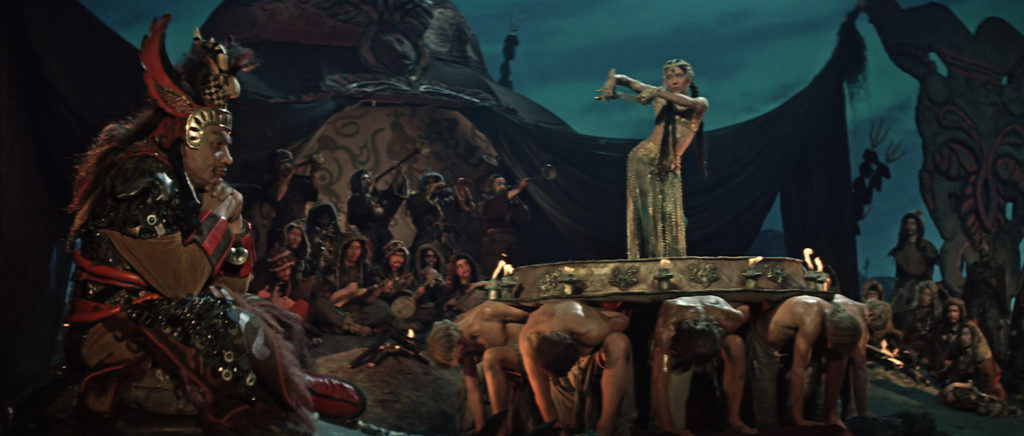
In adapting the various bogatyr legends Ptushko was obliged to take a state mandated nationalist approach; thinly veiling the propaganda in the film. What makes Ilya Muromets a masterpiece is how Ptushko brings his artistry to the forefront of the project. His background as an animator made him a natural choice to helm an epic film of Russian legends. The scope cinematography suits the painterly color palettes and theatrical set pieces to such an extent that at times it feels as though a nineteenth century painting had miraculously come to life.
Ptushko had the uncanny ability to use the color palette of a film to seamlessly unite such disparate cinematographic elements as on location photography, stop-motion effects, and sound stage photography. Boris Andreyev (who plays Muromet) can move from one special effects shot to the next and it simply feels like the most natural thing in the world. And it isn’t that Ptushko shies away from more extravagant effects, he actually opts to translate as much of the bogatyr myths literally on the screen. The technical prowess on display that allows a mountain of squirming men to support a horse, a three headed in flight, and the infamous Nightingale Robber to seem perfectly natural makes Ilya Muromets the Russian cinematic equal to The Thief Of Bagdad (1940).
Ptushko’s ability to also weave whimsical musical numbers (often performed by Ninel Myshkova) easily into the fairytale milieu of Ilya Muromets reveals his close study and admiration of Walt Disney’s animated features (an aesthetic interest he shared with Sergei Eisenstein). Ilya Muromets, despite being a complex assortment of techniques, has a very consistent tone. This is a film that celebrates early Russian history that’s appropriate for all ages. To do this Ptushko adheres to Disney’s strategy of dealing almost exclusively with highly recognizable visual signifiers rather than attempting to invest a more unique image complex with a contained, nuanced meaning. Ptushko paints in broad strokes trusting implicitly in the viewer’s ability to recognize a heroic knight, a fair maiden, and an evil conquerer without having to develop these characters in a humanistic fashion.
The reason that this whimsical approach to tone and character development works in Ilya Muromets is that the tales of bogatyrs are essentially chronicles. The Muromet legends are to Russian culture what Arthurian legends are to the West, right down to how they came to be recorded in the written word. These tales each have a clear moral message which, as far as the Soviet Union was concerned, made them excellent vessels for state authorized propaganda.
If one is ignorant of bogatyr myths or unwilling to take the Muromet legend at face value then it is likely that all one will recognize in Ilya Muromets is the Soviet propaganda. However Ptushko’s mastery of the cinematic from is undeniable. It’s astounding that this film has wallowed in obscurity and critical disregard for so long when its merits are so painfully obvious. This is a key piece to the tapestry of world cinema that cannot be missed.
