
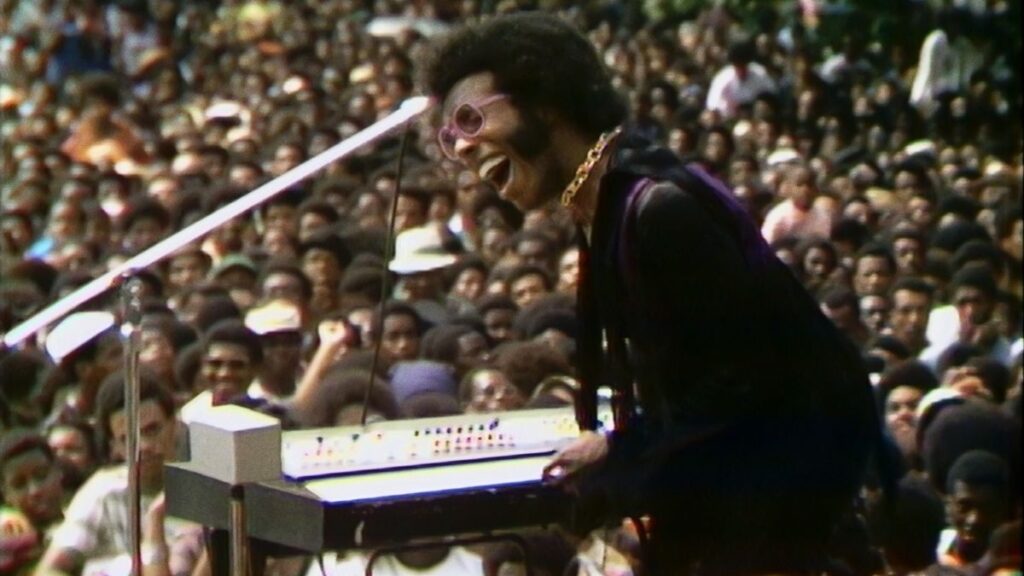
In 1969 Hal Tulchin produced a film record of the shows performed as part of the Harlem Cultural Festival. Roughly fifty years later Robert Fyvolent came into possession of the footage and, with Ahmir Khalib Thompson directing, released it as Summer Of Soul (2021). Summer Of Soul is a vital rediscovery of a moment in Black history. Summer Of Soul has been called the “Black Woodstock” which is not only apt, but signifies the void that this film is attempting to fill within our collective cultural heritage.
Nina Simone, Sly & The Family Stone, Hugh Masekela, The Staple Singers, The Fifth Dimension, Stevie Wonder, Mahalia Jackson, and dozens more all make appearances in the film. Unfortunately these performances are often limited to only one number in the film with the audio being edited to allow voice overs by interviewees while artists are performing. Most of the time the contemporary interviews simply state the power and importance of the image which, naturally, speaks for itself. This gives the impression that the filmmakers don’t trust their audience to see, hear and be touched by these performances on their own. The order in which artists appear does not follow any historical accuracy, but serves instead the quasi narrative that the film establishes.
The loose narrative trajectory of Summer Of Soul essentially works to chart the transition from mid-sixties Black culture to early seventies Black culture; connecting different musical styles to key events in the political landscape of the sixties. This makes Summer Of Soul a kind of capsule version of Black history in the sixties. The problem then is that the frame provided by the concert footage cannot support this lofty goal beyond the most superficial reading of that history. In the end neither the musical performances nor the facts of history are really served adequately. The formal qualities of Summer Of Soul work more as propagandist rather than as straight journalism.
However, the goal of opening a discourse around the largely oppressed history of Black Americans among theater goers is achieved. It’s a film of political immediacy. Summer Of Soul as a re-watchable film entity is questionable, but as an act of defiance and an instrument of leftist thought it is essential and maybe even genius.
