The best science fiction authors (Stanislaw Lem, Ursula K. Le Guin, Theodore Sturgeon, Philip K. Dick, Harlan Ellison, etc.) all view the genre as a means of investigating and reckoning with our society. The best sci-fi films do this as well, often using the works of these authors as a launching pad. Works such as Star Wars (1977) represent the purely escapist impulse of the genre which may make such works more popular though far less compelling.
Jindřich Polák’s Ikarie XB-1 (1963) is the progenitor of the aesthetic of science fiction film that served as the basis for such works as Star Trek (1966-69), 2001: A Space Odyssey (1968), Silent Running (1972), and Solaris (1972). A loose adaptation of a novel by Stanislaw Lem, Ikarie XB-1 grapples with issues such as human sanity, loneliness, and Hiroshima within the context of a mission through space to seek out new life and civilization. Polák’s style is sterile, keeping the audience at a discreet distance as vignettes unfold, one after another, which each deal with one of these themes.
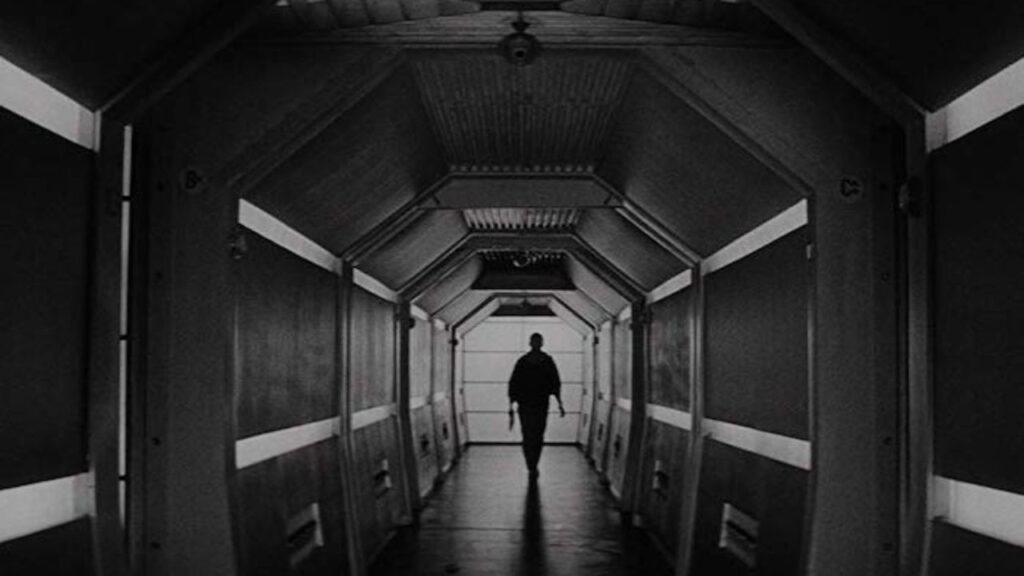
The production design and special effects rival that of Eiji Tsuburaya’s work at Toho. But the effect of these trappings isn’t campy, it’s quite serious. The shots of the Ikarie hurling through space have a simplistic beauty to them; a practical effect where none of the mattes or strings are visible. The ship interiors feel like a genuine space, a tangible setting. As if the set were somehow ripped from the distant future and magically transported to Czechoslovakia in the 1960s.
The overall theme or message of Ikarie XB-1, as with so many films in this genre, is that despite technological advancements human frailties and fallibilities remain unchanged. The past is always clearer than the present which is mankind’s great weakness and what almost finishes the crew of the Ikarie. Furthermore the film ends on an ambiguous note where intelligence has been most certainly discovered on an alien world but Polák never shows our cosmonauts make first contact; the ending isn’t important, only the journey matters.
